




How to Choose the Perfect Trench Coat for Spring
Why a Trench Coat Works in Spring
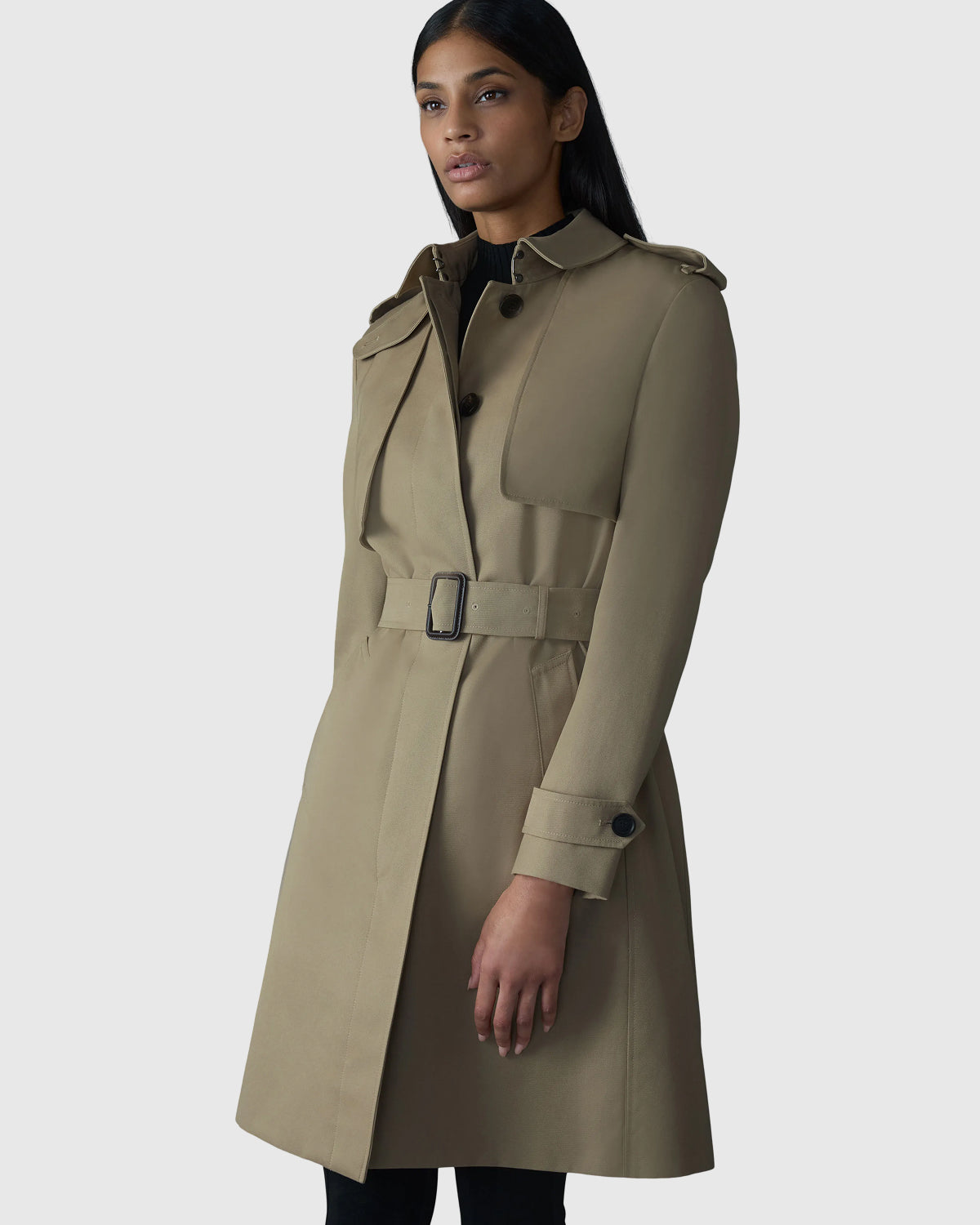
A trench coat answers a familiar spring question: what to wear when the weather shifts throughout the day. It offers enough coverage for cool mornings, protection against wind and light rain, and a lighter feel than winter outerwear.
For city living, that balance is essential.
The trench coat remains a constant in a modern wardrobe. It layers easily over tailoring during the week and relaxed pieces on weekends, moving seamlessly between work, travel, and evening plans. A well-chosen trench adds structure without excess weight, bringing polish without feeling overdone.
What Makes a Great Spring Trench Coat
Spring outerwear should feel considered, not heavy. The best trench coats balance weight, protection, breathability, and structure.
A lightweight trench coat should offer:
- Enough structure to hold its shape
- A fluid drape that moves naturally
- A smooth interior that layers easily over shirts and fine knits
For weather protection, spring typically calls for light coverage rather than full storm protection. A well-designed trench coat should:
- Provide water resistance for rain and mist
- Shield against wind in open streets
- Dry quickly while maintaining its form
Breathability is equally important. Moving between outdoors, transit, and indoor spaces, the coat should allow airflow and prevent overheating.
Fit should feel tailored but not restrictive. Look for:
- Ease through the shoulders
- Sleeves that accommodate light layering
- Clean, vertical lines that skim the body
The goal is a coat that looks sharp worn open or belted, with enough flexibility for daily movement.
Choosing the Right Fabric
Fabric defines how a trench coat performs and how it feels to wear.
Cotton and cotton-blend trench coats remain a classic choice, offering:
- Breathability and comfort
- A matte, refined surface
- Versatility across casual and tailored outfits
Technical fabrics introduce a more modern approach. When executed well, they:
- Deliver water resistance without added weight
- Maintain structure throughout the day
- Resist creasing, making them practical for travel and commuting
Many premium trench coats incorporate water-resistant finishes that allow rain to bead off while preserving a clean, elevated appearance.
Consider the level of structure you prefer:
- Structured fabrics create sharper lines and a more architectural silhouette, pairing well with tailoring.
- Softer fabrics drape more naturally, lending themselves to relaxed, everyday styling.
The right choice depends on how you move through your day and how you want the coat to integrate into your wardrobe.
Fit and Silhouette: What to Look For
Fit defines both comfort and presence.
A more tailored trench coat works well for:
- Streamlined wardrobes
- Professional settings
- A defined shoulder and waist
A relaxed silhouette introduces ease and versatility, especially if you:
- Layer frequently
- Prefer softer, more casual styling
- Value movement and comfort
Length also plays a key role:
- Short: More casual and practical for active days
- Mid-length: The most versatile, suitable for commuting and everyday wear
- Full length: More coverage and a stronger visual statement
When assessing fit, consider how the trench coat layers. It should accommodate a light sweater or blazer without pulling, allowing full range of motion when walking, sitting, or reaching.
Details such as belt placement, collar structure, and back vents subtly influence how the coat sits and moves.
Functionality for City Living
A trench coat designed for city life should adapt to a full day of movement.
For commuting, consider:
- Secure, well-placed pockets
- Closures that are easy to adjust on the move
- A collar that can be worn up against wind
Spring requires constant transitions between indoor and outdoor environments. A well-designed trench coat should feel:
- Light enough to wear indoors briefly
- Easy to open without losing structure
- Comfortable layered over workwear
Movement is equally important. Whether walking, commuting, or carrying a bag, the coat should allow:
- Flexibility through the upper back
- Ease in the sleeves
- Natural movement when sitting or climbing stairs
A trench coat should support your routine, not restrict it.
How to Style a Trench Coat for Spring
A trench coat integrates easily into everyday dressing.
For daily wear:
- Relaxed denim, a fine knit, and sneakers
- Tailored pants, a simple T-shirt, and loafers
- Lightweight layers such as a hoodie or zip-up knit
For work:
- Layered over suiting or tailored pieces
- Paired with dresses or skirts and structured footwear
- Worn with tonal outfits for a clean, continuous silhouette
For travel:
- Styled over loungewear or knit sets
- Layered with versatile pieces for changing plans
- Used as a single outer layer across different settings
A few consistent combinations simplify spring dressing while maintaining a refined look.
Investment Value and Final Buying Checklist
A well-made trench coat is designed to last beyond a single season. Over time, quality construction becomes increasingly evident.
Look for:
- Clean, precise stitching
- Durable, well-finished hardware
- A collar and lapel that hold their shape
Because a trench coat is worn across multiple occasions, its cost per wear decreases quickly. A timeless design remains relevant year after year.
Before choosing, consider:
- Fabric weight suited to spring conditions
- Water resistance and wind protection
- Breathability for indoor and outdoor transitions
- Fit that allows layering without compromising shape
- Length aligned with your daily routine
- Functional details such as pockets, belt, and vents
Try the coat with your typical layers and move as you would throughout the day. The right trench coat will feel aligned with both your environment and your routine.
Discover Spring Trench Coats
Explore outerwear designed for transitional weather, where structure, lightness, and performance work together. Mackage trench coats are crafted with precision and high-quality materials, offering a balance of protection and refined design suited to everyday city life.